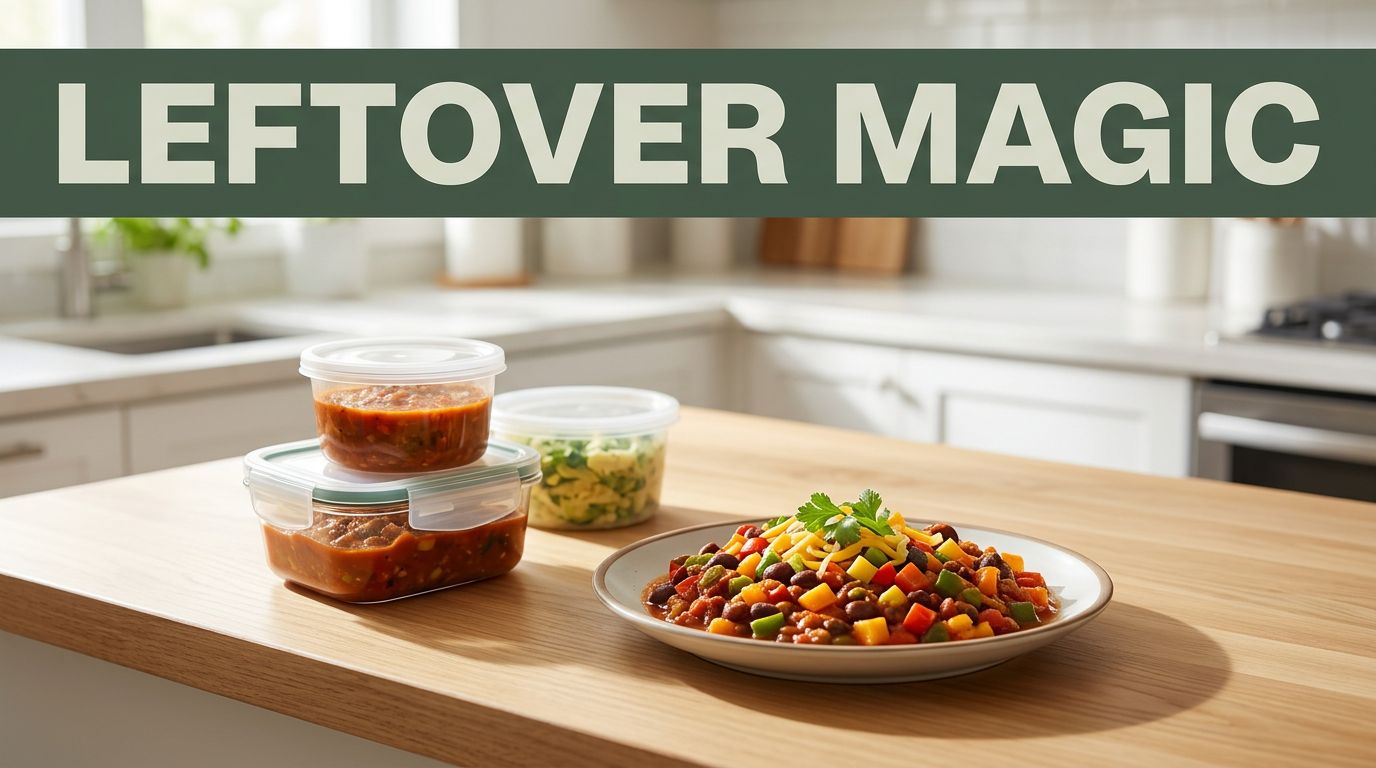
Ever open the fridge, stare at a container of food, and feel that small guilt spike when you think, “I should toss this”? You’re not alone. In fact, as grocery prices stayed high into 2026, 45% of Americans reported repurposing leftovers into new meals in recent surveys. That’s not just a trend, it’s a survival skill.
Repurposing leftovers helps you in three ways at once. You save money, you cut food waste, and you reduce landfill methane when less rots in the trash.
Next, you’ll see why leftover food matters more than you think, then you’ll get practical storage hacks and easy “second-meal” ideas, including veggie chili and tuna casserole.
Why Repurposing Leftovers Saves You Money and Helps the Planet
Leftovers are like money you already paid for. Tossing them feels painless at first, then your grocery total brings the bill back later.
In the US, households waste about 32% of the food they buy, which equals 43% of all food waste. One family of four can lose hundreds to thousands of dollars each year on food that never gets eaten.
When you repurpose leftovers, you stop that leak. You’re not just “being frugal.” You’re also reducing the mess that food waste creates.
Here’s what the planet side looks like, in plain terms:
- Less trash means less rotting food in landfills.
- Food in landfills releases methane, a strong greenhouse gas.
- When you use leftovers first, you also save water and energy tied to growing, transporting, and packaging food.
A lot of people also report feeling better about eating when they turn scraps into meals. Upcycled cooking can push you toward more veggies, beans, and fiber, which many folks connect to gut-friendly eating habits.
I still remember a week I cooked extra pasta sauce, then ignored the last scoop in the fridge. By the time I noticed it, it smelled “off.” That was my wake-up call. Now I plan a “leftover meal” on purpose, not as a last resort.
If you want a bigger picture of where food-waste trends may land in 2026, this ReFED forecast is a helpful read: 2026 food waste forecast.
Cut Your Grocery Bill with Smart Scrap Use
Leftovers don’t need to feel sad. They can feel like a bonus. And when grocery prices stay high, that matters.
Try this simple mental math: if you save a little of “almost dinner” each day, you can often turn it into 2 to 3 extra meals in a week. The pieces don’t have to match perfectly either. A few spoonfuls of roasted veggies, leftover rice, and half a bag of greens can become something new.
This also pairs well with smaller-eat habits that many people use now. You might eat lighter for dinner, then graze snacks during the evening. Grazing boards, lunch bowls, and “one more bite” plates make leftovers more likely to get eaten fast.
Instead of thinking, “I need to finish everything,” think, “I need to reuse something today.” That mindset keeps food from turning into compost.
Shrink Your Carbon Footprint One Meal at a Time
When you skip food waste, you’re shrinking your footprint without buying fancy gear.
Food waste affects the climate because when food breaks down in landfills, it can release methane. Clean Air Task Force tracks this type of methane reduction work, and it’s a good place to see how waste-sector changes are being discussed: waste sector methane trends.
You don’t have to do everything. You just need to do something consistent.
Here’s a helpful way to picture it: every leftover meal is like moving food from “trash time” to “dinner time.” That one switch cuts down the amount of food that rots in the first place.
Even small wins add up fast. One repurposed casserole can replace a takeout meal. One leftover veggie chili can stop you from buying a new package of veggies that might sit too long.
Storage Tricks That Keep Leftovers Fresh Longer
Storage isn’t glamorous, but it’s the difference between “still good” and “why does this smell weird?”
The biggest problem is usually time and temperature. So focus on two things: getting food into the fridge (or freezer) quickly, and labeling it so you actually see it.
Freeze Smart to Pause Spoilage
Freezing doesn’t “erase” food safety issues. However, it can pause spoilage when you do it right.
Use this simple routine:
- Cool fast: let hot food rest briefly, then refrigerate or freeze.
- Portion small: freeze in meal-sized packs. It thaws quicker.
- Label dates: write what it is and the freeze date.
- Seal tight: use freezer bags or airtight containers to prevent freezer burn.
- Stack by type: soup together, grains together, meat together.
If you’re freezing veggies, remove excess moisture first. For example, pat greens dry, then bag them. That helps them stay usable for stir-fries, soups, and chili.
You can also bag “produce odds” with a date. Keep a container labeled for veggie ends, like carrot coins, onion scraps, and celery chunks. When you have enough, simmer them into broth.
Organize Your Fridge for Easy Spotting
If leftovers hide in the back, they don’t stand a chance. So make visibility your superpower.
Most fridges become food graveyards for one reason: the system isn’t designed for fast use. A visibility-first setup helps. If you want a guide for creating that kind of system, see a visibility system in your fridge.
Try this practical setup:
- Put leftovers in clear containers on a middle shelf, not the bottom back.
- Keep “use soon” items together in one bin.
- Add a short label, like “Cooked rice, 3 days” or “Tuna casserole, freeze.”
- Keep raw meat separate, so you never mix smells or juices.
Also, check your fridge like you’re shopping. Pick one item before you open a new package of food. This habit helps you reduce food waste without needing extra willpower.
A quick note: if something smells sour, looks fuzzy, or tastes off, don’t “test it.” Toss it. Food safety beats saving a few dollars.
Turn Everyday Leftovers into Crowd-Pleasing Meals
Leftovers taste best when they get a second job. Sometimes that job is comfort. Other times, it’s crunch, sauce, or heat.
Below are easy transformations that feel like real meals, not punishment food.
Veggie Scraps into Hearty Chili or Smoothies
Vegetable scraps love chili. They also work well in blended snacks, especially when you want more fiber.
For vegetarian chili, start with what you already have. Odds and ends from your crisper drawer, plus beans, turn into something hearty.
A simple approach:
- Chop scraps into bite-size pieces.
- Simmer with canned beans, tomatoes, and chili spices.
- Portion into containers for lunches or quick dinners.
If you have extra sauce from another meal, toss it in. If the veggies are already cooked, add them later so they don’t turn mushy.
For smoothies, think about using soft scraps like cooked squash, steamed greens, or fruit that’s slightly too ripe. Blend with yogurt or milk, then freeze thick smoothie portions for later.
If you want a ready-made leftover-friendly chili idea, this is a solid example: clean-out-your-fridge vegetarian chili.
Meat and Dairy Leftovers Shine in Casseroles and Dips
Dairy leftovers often get overlooked, but they can do great work. Cheese, sour cream, and yogurt can turn leftovers into creamy comfort food.
Tuna noodle casserole is a classic for a reason. It’s cheap, filling, and forgiving. Here’s the easy formula:
- Mix canned tuna with cooked noodles.
- Stir in leftover veggies (peas, corn, chopped celery) and a creamy binder like cheese or soup.
- Layer in a baking dish, then bake until bubbly.
Next, think dips. Leftover beans plus salsa plus shredded cheese can become a quick layered dip for chips or toast. If you have cooked meat, fold it in last so it stays juicy.
Rendered fats can also help with frying if you already have them. For example, leftover drippings can become a cooking fat for crispy fries. Just cool and store safely first.
And yes, casseroles can be “one pan” meals even when you’re using scraps. That’s the point. Less stress, more reuse.
Grains and Produce Power Up Noodles and Bowls
Grains and cooked produce are the easiest leftover upgrades. They reheat fast, and they love bold flavors.
Try one of these quick meal paths:
- Stir-fry or “yaki udon” style noodles using cooked noodles, leftover veggies, and a sauce you can mix in minutes.
- Gochujang power bowls using rice, leftover roasted vegetables, and a spicy-sweet sauce.
- French onion soup vibe using onion ends (and any other veggie bits) cooked down with broth.
For speed, cook your base first, then add toppings at the end. That way, greens stay bright and grains don’t dry out.
Also, nostalgia helps. Leftovers can feel exciting when you give them a fun shape. Layer a bowl with crunchy toppings, or turn leftover rice into a fried “snack plate.” You might even make small grazing boards, one bite at a time, so food doesn’t sit too long.
Daily Habits to Make Fewer Leftovers from the Start
You can’t prevent leftovers completely, but you can prevent the sad ones.
Start with shopping and planning. Buy less than you think you need, then check what you already have before grabbing fresh items. Many people now do this to cut waste, especially when budgets feel tight.
Then, shift your meal timing. Plan for one day where you’ll use leftovers, even if you don’t know exactly what yet. The goal is to avoid “mystery containers” that sit until trash day.
A few habits that work for most people:
- Portion by appetite, not hope. If you’re unsure, serve smaller portions first.
- Eat from oldest first by checking labels and dates.
- Build snack meals from leftovers, not just dinner.
- Create one “grazing board” night with leftovers, bread, and crunchy sides.
If you want more fridge-focused habits, this article has practical reminders for reducing waste: reduce food waste in the fridge.
Most importantly, pick just one habit for the week. Maybe it’s labeling containers. Maybe it’s freezing small portions early. Once it feels normal, add the next step.
Conclusion
That fridge moment of guilt is also a chance. Instead of throwing food away, repurpose leftovers into meals that feel worth eating. Storage tricks help, because better timing keeps leftovers safe. Then recipe swaps like veggie chili and tuna casserole make reuse feel fun.
This week, choose one leftover container. Turn it into a new meal, and keep the rest moving forward with smarter storage.
What leftover do you want to save first, and what are you going to turn it into?