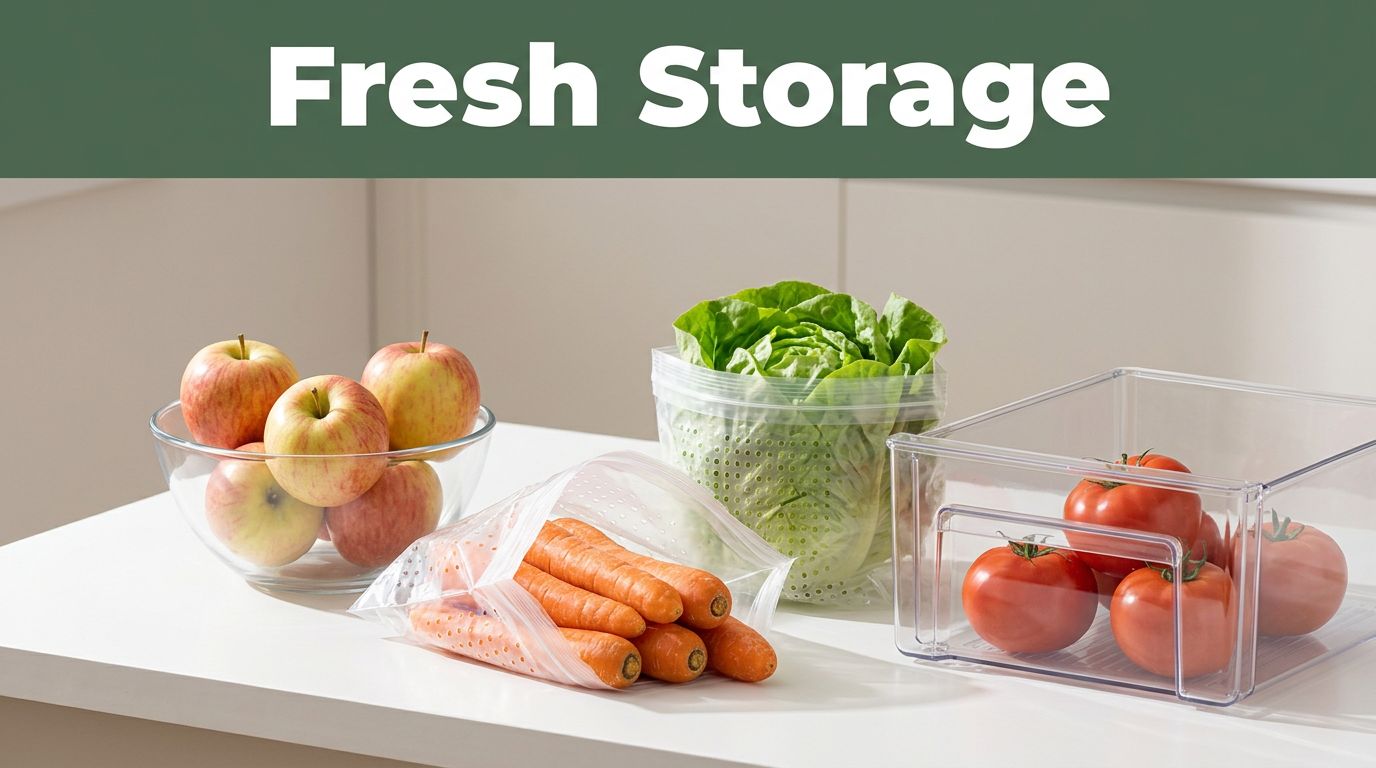
Ever buy a big bunch of produce, then toss half of it by midweek? It happens fast. Many people feel like 20% to 30% of what they bring home never makes it to the fridge shelf.
The reason is simple: fruits and veggies keep “working” after harvest. They ripen, lose moisture, and sometimes speed up each other’s spoilage. If you store them the same way, you’re basically mixing the causes of decay.
Good news, though. With a few 2026-style best practices (separating ethylene, using the right temps, and controlling humidity), you can cut waste and save money. You’ll also spend less time re-buying the same items.
Next, you’ll learn why ethylene gas matters, how to store common produce groups, and which habits quietly doom your groceries.
Unlock the Secret of Ethylene Gas and Why It Ruins Your Grocery Haul
Some fruits release ethylene gas, a natural ripening signal. That gas tells other produce to ripen faster, even when you want it to stay crisp.
Think of it like a group chat that won’t stop. One fast-ripening item “messages” everyone nearby. As a result, sensitive items lose firmness, turn soft, and spoil sooner.
Here’s the basic pattern:
- Ethylene producers: apples, bananas, avocados, tomatoes
- Ethylene-sensitive: berries, leafy greens, broccoli, cucumbers
If you want a quick kitchen hack, separate them right away. You can do it with crisper drawers, separate bags, or even a simple divider on the counter until everything lands in storage. For a deeper look at which produce tends to release ethylene, see Ethylene Producers: Store Your Fruits & Veggies Right.
Temperature also matters, because it controls how quickly plants respire and age. Use these as practical home ranges:
| Produce type | Target temp | Humidity level | Why it helps |
|---|---|---|---|
| Most vegetables | 32–50°F | Higher | Slows moisture loss and wilting |
| Many fruits (except berries) | 50–60°F | Lower to medium | Keeps ripening in check |
| Fridge storage rule | 40°F or below | Varies by item | Reduces decay growth |
Also, not everything belongs in the fridge. Bananas often taste and soften faster when chilled. Potatoes do better in a cool, dark pantry.
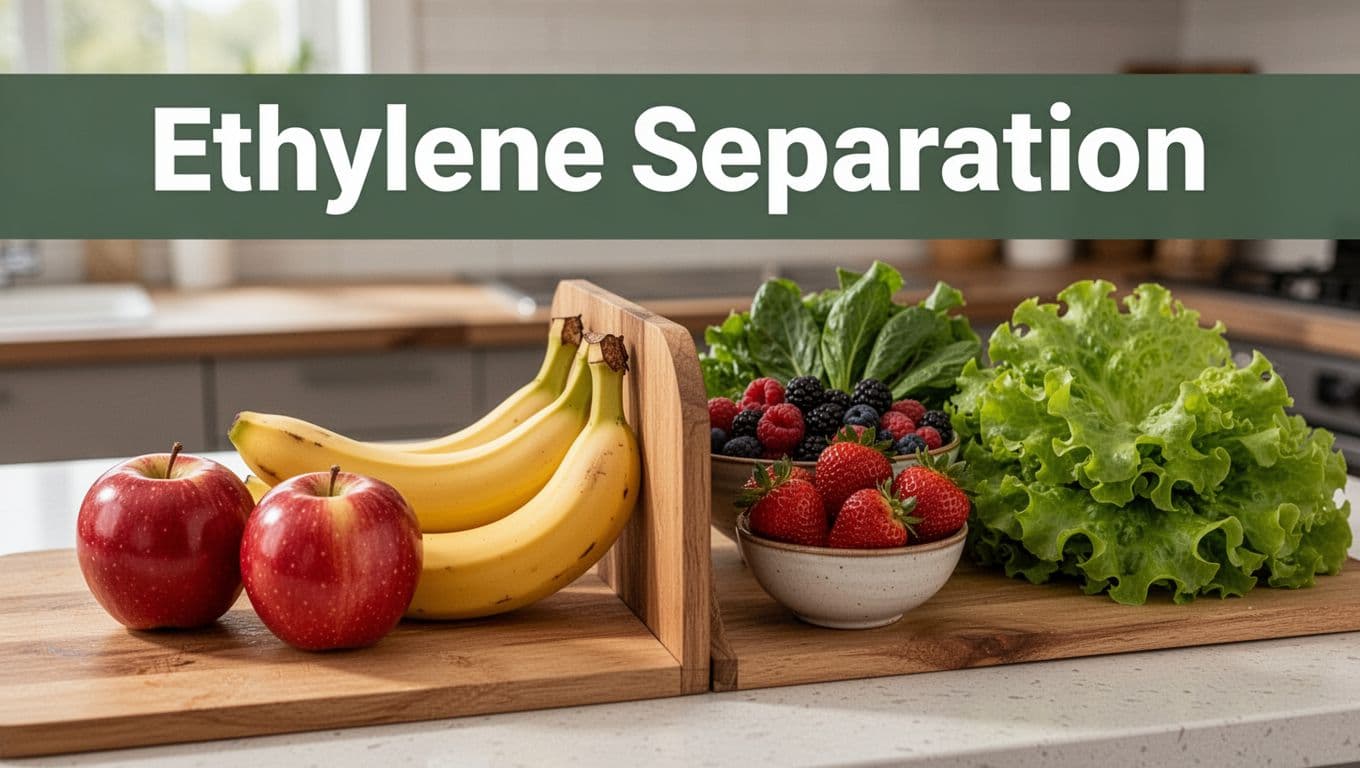
Before you reorganize your fridge, here’s the key takeaway: separate ethylene producers from sensitive produce, then fine-tune temp and moisture.
Smart Storage Hacks for Apples, Bananas, Berries, Citrus, and Avocados
Most storage problems come down to two things: airflow and moisture.
Airflow helps prevent sogginess and mold. Moisture control helps prevent shriveling and wilting. So instead of one big “produce bag,” try smaller setups that match each item’s needs.
Here’s a quick guide you can actually use during a grocery unloading session:
| Item | Best place | Simple rule | Typical life with good storage |
|---|---|---|---|
| Apples | Crisper (often in fridge) | Keep alone in a vented bag | Up to 1 month |
| Bananas | Counter (until ripe) | Store loose, away from berries/greens | 2–3 days before ripening slows |
| Berries | Fridge crisper | Unwashed, ventilated container | 2–3 days |
| Citrus (oranges, lemons) | Crisper or cool spot | Mesh or vented storage | Up to 2 weeks |
| Avocados | Ripen at room temp | Move to fridge once ripe | 3–5 days after ripening |
If you like rules that match real life, many people also adjust storage based on whether the item is ripe yet. For a broad run-down of what to refrigerate and what not to, check Should I refrigerate apples? An A-to-Z guide to storing fruits and vegetables.
One more habit matters: don’t wash produce before storage (unless a recipe forces you to). Water speeds up spoilage. It also spreads mold from one piece to the rest.
Apples and Pears: Keep the Ethylene Monsters Isolated
Apples and pears are great fruits, but they’re also ethylene producers. So if you keep them next to berries or greens, you’ll see faster softening.
Here’s what to do in a simple, low-effort way:
- Place apples in the crisper.
- Keep them in a plastic bag or container with airflow.
- Store only apples or pears in that space, not mixed produce.
If you want them to last, aim for a stable fridge temperature (about 40°F or below). Then, avoid frequent crisper drawer opening when you can. Every time the door opens, the temperature swings and moisture shifts.
Also, don’t assume pears behave exactly like apples. They ripen fast once they start. So check them sooner rather than later.
A helpful reminder: ethylene works like a “ripening push.” When you isolate apples and pears, you stop that push from spreading. For more on ethylene’s role in spoilage, Keep Your Produce Fresh: How Ethylene Gas Affects Fruits & Vegetables explains the problem clearly in plain language.
Bananas and Berries: Room Temp vs Fridge Face-Off
Bananas need a split plan, depending on ripeness.
- Before fully ripe: keep them at room temp, away from berries and greens.
- After they’re ripe: move them to the fridge to slow the ripening pace.
You can also reduce speed by storing bananas away from other fruit. If your bananas share a bowl with apples, it’s easy to watch everything get mushy too soon.
Berries follow the opposite logic. They’re sensitive and delicate, so they usually do best cold and airy:
- Keep them unwashed until you eat them.
- Use a shallow container, lined if needed.
- Store them in the fridge crisper, but avoid packing them too tight.
If you notice any moldy berries, remove them right away. Mold spreads quickly, especially in humid pockets.
And yes, if you’ve ever stored berries in a closed container that traps moisture, you’ve learned why they melt fast. Moisture + warmth = a short berry life.
Proven Ways to Store Leafy Greens, Roots, Tomatoes, Potatoes, and Onions
Now let’s talk about the produce that always seems to disappoint. Leafy greens wilt. Roots sprout. Tomatoes get weird and soft.
The trick is to store each group for what it does naturally after harvest. Greens lose water quickly. Roots like steady, higher humidity (sometimes). Tomatoes prefer room conditions for best texture.
Here’s your practical baseline:
| Item group | Best storage | Key rule | Target timeframe |
|---|---|---|---|
| Leafy greens | Crisper | Wash, dry well, keep airy but not dry | 4–7 days |
| Roots with tops (carrots, beets) | Bag with high humidity | Remove or manage tops | 1–2 weeks |
| Tomatoes | Counter | Store stem-side down, out of direct sun | 3–7 days |
| Potatoes | Cool, dark pantry | Keep away from light and heat | 1–2 months |
| Onions | Ventilated pantry | Keep dry, avoid sealed bags | 1–2 months |
If you want the food-science version of why these rules work, take a look at Beyond the Basics: How to Make Produce Last Longer Using Food Science. It connects ethylene, respiration, and moisture in a way that makes storage feel less random.
Leafy Greens and Cruciferous Veggies: The Humidity Hero Method
Leafy greens are mostly a moisture story. If they get too dry, they wilt fast. If they get too wet, they rot fast.
Here’s the method that usually works in a normal home fridge:
- Wash greens only if needed, then dry them well.
- Spin dry helps a lot.
- Put them in a crisper with a paper towel to catch extra moisture.
- Store them in a ventilated bag or container.
If you can, keep stems slightly more protected than leaves. Some people wrap greens loosely in paper towels, then place them into a plastic bag with small vents.
Also, remember ethylene sensitivity. Leafy greens can suffer nearby ethylene producers. So keep apples and bananas away from the greens drawer.
Cruciferous veggies like broccoli and cauliflower also like good airflow. If they get slimy, it’s often trapped moisture. So don’t seal them in a way that makes condensation build up.
Root Veggies and Tubers: Cut the Greens and Crisper It
Roots and tubers need space and the right conditions. Plus, the tops matter.
For carrots, beets, and similar roots:
- Remove leafy tops if they’re still attached.
- Store the roots in a bag with slightly higher humidity.
- Keep them in the crisper so they don’t dry out.
For potatoes and onions, the rule is different: they usually do not belong in the fridge.
Potatoes want:
- cool temps,
- darkness,
- and airflow.
Light can lead to greening, and that’s not what you want. Also, heat speeds sprouting.
Onions want:
- a dry environment,
- ventilation,
- and separation from moisture-heavy produce.
So keep onions in a ventilated bin or a basket. If you store them with damp veggies, they can soften and spoil early.
Avoid These Sneaky Mistakes That Doom Your Produce to the Trash
If you’ve ever dumped a sad salad into the trash, you probably made one of these “small” mistakes.
Here are the ones that most often cut shelf life:
- Washing before storage: extra water speeds spoilage and mold.
- Mixing ethylene producers and sensitive produce: apples, bananas, and avocados can shorten berry and greens life.
- Storing wet greens or herbs: moisture makes leaves turn slimy fast.
- Overcrowding the fridge: airflow drops, condensation rises, and bruises get worse.
- Leaving tomato and banana rules on autopilot: chilling bananas too early and fridging tomatoes too long can ruin texture.
- Keeping potatoes or onions in sealed containers: trapped moisture encourages soft rot.
The easiest fix is also the most boring: give produce the right “room.” Separate drawers, separate bins, and smaller containers help a lot.
If you want a fast reset, start with your most waste-prone items. For many households, that’s berries and greens first, then potatoes and onions after.
Fresh Finds: 2026 Tools and Trends to Supercharge Your Storage
In 2026, storage tools focus less on gimmicks and more on moisture control and airflow. That means containers with vents, humidity management, and easy re-use.
You can also reduce waste with simple habits that pair well with newer storage items:
- Use reusable vented bags for berries and greens.
- Try containers with adjustable airflow for crisper drawers.
- Keep a small paper towel roll in your produce area for quick moisture fixes.
If you like tech, newer fridge setups and apps can track temperatures and remind you to check produce. Still, the best “tool” is a habit: separating ethylene producers early.
You can even do a low-cost version at home. For example, zip bags with a few gentle vents can help some items breathe. Just don’t seal tightly for moisture-prone produce.
And if you’re trying to go more eco-friendly, reusable containers and fewer throwaway liners cut down on waste over time.
Conclusion
You don’t need a fancy setup to stop produce from dying early. The biggest wins come from separating ethylene producers, using the right fridge temps, and avoiding pre-wash when you can.
Once you set those basics, storage gets easier. Apples, bananas, berries, leafy greens, and roots each follow their own logic. When you match that logic, food lasts longer.
Try one change this week. Pick one group you always waste, then store it the “right way” today. You’ll notice fresher meals and fewer grocery restocks before you expect it.