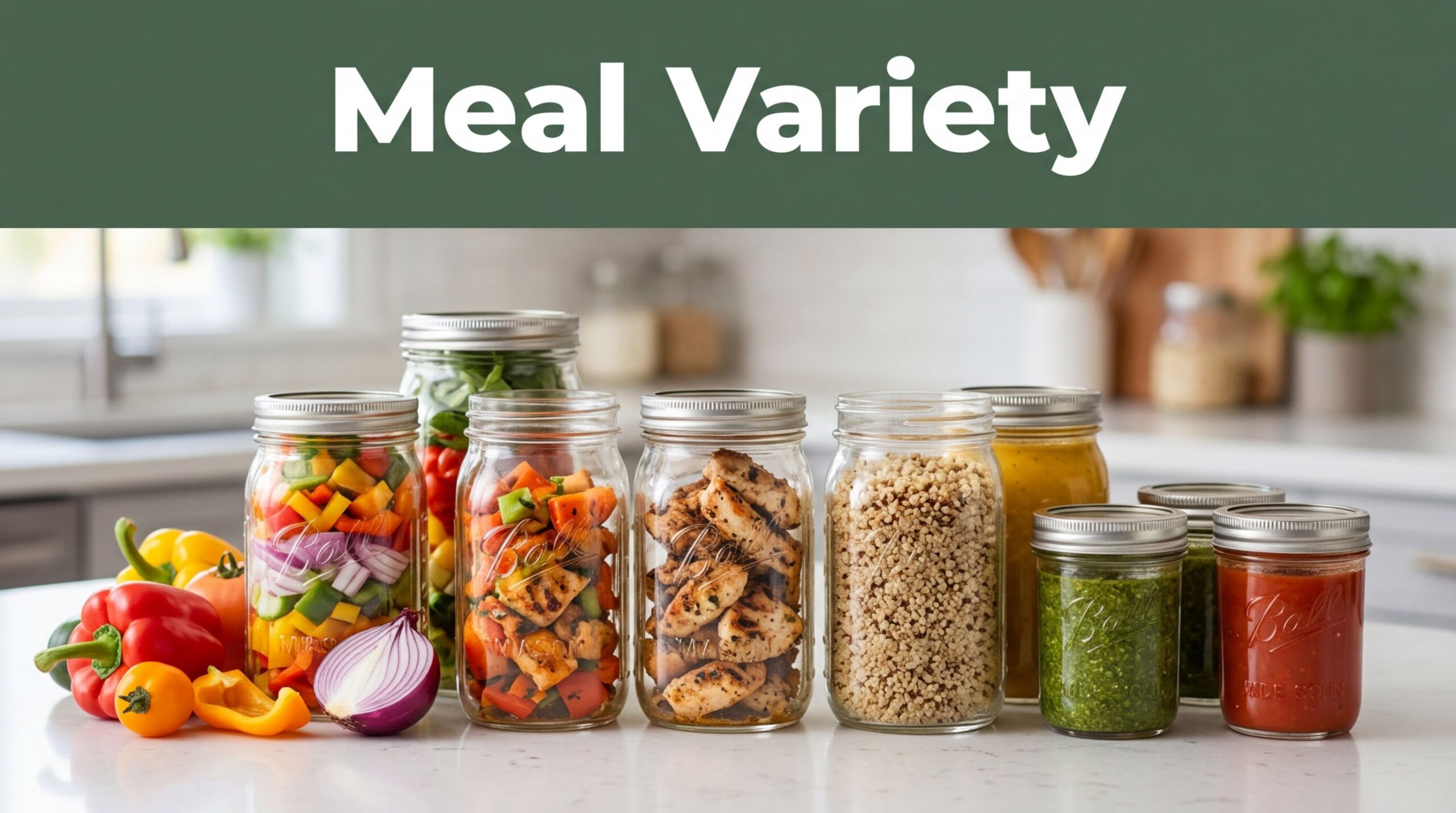
Boring repeat meals can drain your energy fast. You cook once, it feels fine on Monday, and then by Wednesday you’re staring into the fridge like it betrayed you.
Bulk cooking fixes the time part, but it only works if your meals still feel new. The big wins are simple: fewer cooking nights, less grocery stress, and meals you can actually look forward to.
The trick is to plan for variety (not perfection), swap flavors on purpose, store food so texture stays good, and treat leftovers like ingredients. Let’s turn your next bulk prep into a “fresh every time” system.
Plan Your Bulk Sessions to Build in Variety from the Start
Start with what you already have. Then build a plan that uses those ingredients before boredom does.
Grab a quick inventory sweep of your fridge, freezer, and pantry. Look for what’s close to running out, what you like eating, and what you can build around. This is where ideas start to show up. Maybe you find extra roasted veggies from last week, or a few packs of chicken that need a home.
Next, build your weekly menu using 2 to 3 base meals per day. A “base” is the part that makes the flavor direction. For example, a chicken roast base can become tacos, bowls, and salads later. It’s basically your meal prep blank canvas.
Then shop with sales in mind. If chicken or beans are cheap, stock up. If seasonal veggies are flying at your store, grab a few. In 2026, more US cooks are doing mix-and-match prep days, where components are cooked once, then combined differently all week.
Here’s a simple approach many people use, similar to ideas behind mix-and-match meal prep systems, but tailored to your schedule.
| Day | Base to Make | Mix Later With | Fresh Add-On Idea |
|---|---|---|---|
| Mon | Chicken base | tortillas or rice | lime + cilantro |
| Tue | Bean chili base | baked potatoes or pasta | shredded cheese |
| Wed | Roasted veggie tray | wraps or grain bowls | yogurt sauce |
| Thu | Beef or pork stir-fry | noodles or lettuce | sesame + scallions |
| Fri | Leftover remix | anything leftover | pickles or herbs |
| Sat | Freezer portion night | soup or tacos | hot sauce |
| Sun | “Big prep” components | mix all week | simple salad kit |
A quick note on long-term success: recipes won’t stay exciting if you cook the exact same version repeatedly. Instead, cook different components so the combinations feel intentional.
Take Inventory and Craft a Flexible Menu
Do it in this order, fast and simple:
- Check fridge first (what needs using soon).
- Check pantry next (beans, pasta, rice, spices).
- Check freezer last (meat portions, cooked leftovers).
Write down what you need to use up. Then pick versatile bases you enjoy. Great base candidates are chicken, beans, roasted vegetables, and a hearty sauce like tomato or teriyaki.
If you want a deeper look at flexible batch cooking, batch cooking basics for avoiding boredom explains the “base + mix-ins” idea really clearly.
For example:
- Monday: chicken base (for bowls or wraps)
- Tuesday: bean chili base (for chili bowls or stuffed baked potatoes)
- Wednesday: roasted veggie base (for salads, quesadillas, or grain bowls)
The menu stays flexible because your fresh add-ons change the meal. So you can use what you find in the store without scrapping everything.
Group Your Tasks for a Smooth Prep Day
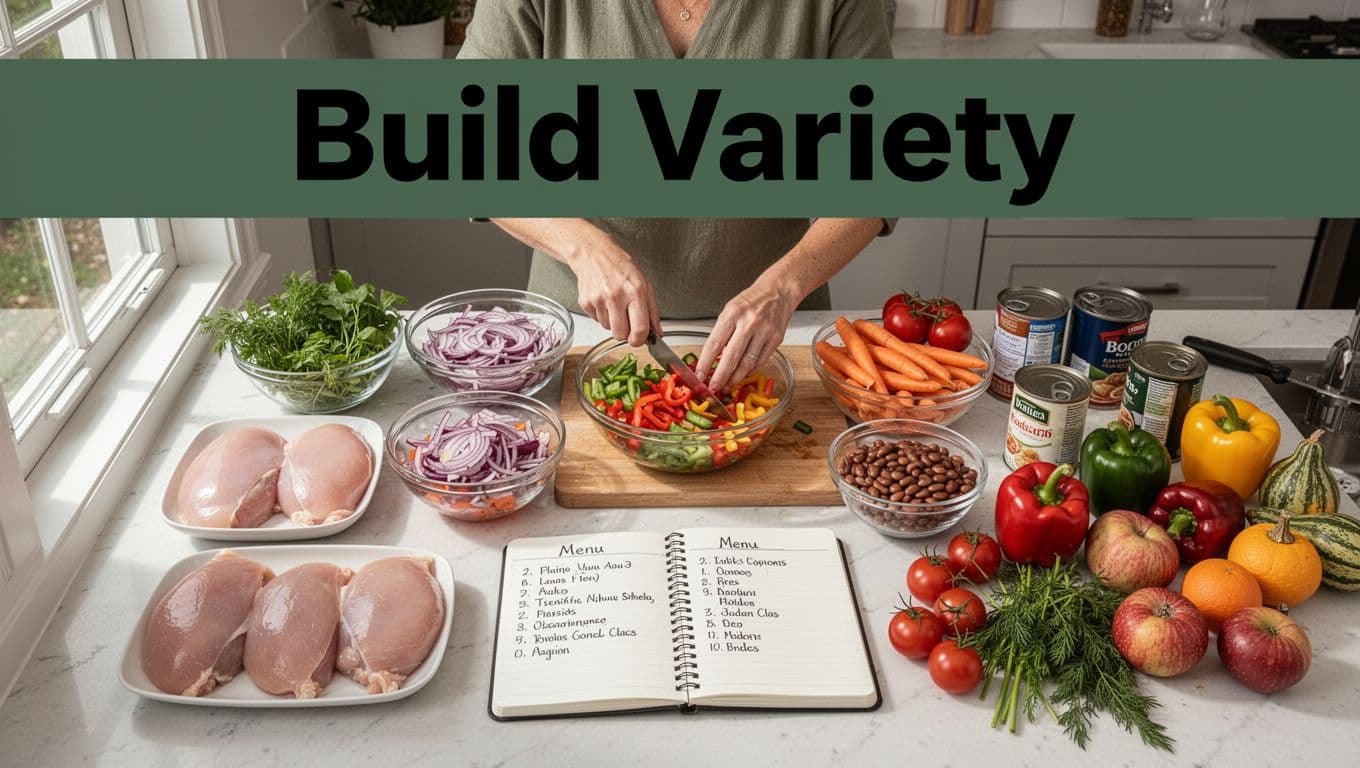
If you cook in bulk but prep like it’s a one-off dinner, you’ll feel overwhelmed. Instead, group tasks like a production line, then clean as you go.
Start with chopping. Do onions, peppers, and the “same veggie family” together. That way, your knife and cutting board stay in rotation.
Then cook the long items first. Roasts, grains, and slow-simmer sauces usually take longer. Meanwhile, shorter tasks can wait.
Finally, clean while you still feel energy. When the kitchen gets messy, boredom shows up too. You start thinking, “I’ll never do this again.”
This also matches the 2026 trend of prepping components separately. You cook components on the same day, but you assemble later. So you can make:
- a tray of roasted veggies
- a batch of chili
- a cooked chicken option Then each night you just pair them with a new sauce and topper.
Also, double your recipes only if you’ll use the leftovers. Plan for leftovers on purpose. If you don’t, you’ll end up with frozen tubs you don’t want to touch.
Master Flavor Swaps That Make the Same Meal Taste Brand New
Flavor fades for two reasons. First, bulk cooking gives you “one note” meals. Second, reheating can mute taste and dry out sauces.
So your goal is not to cook 10 totally different meals. Your goal is to keep the base steady and change the flavor direction.
Think of it like changing the outfit, not the whole person. Your base meal is the person. The sauce and toppings are the outfit.
Also, rotate seasonings and sauces each week. Your taste buds notice fast.
Here are flavor ideas that work with repeat bases.
| Base Component | Quick Flavor Swap | “Fresh Before Eating” Topping |
|---|---|---|
| Grilled chicken | teriyaki, buffalo, pesto, chimichurri | lime, herbs, diced avocado |
| Roasted veggies | ranch, garlic-lemon, za’atar, tahini | parmesan, parsley, a squeeze of citrus |
| Bean chili | southwest, Italian-style, smoky chipotle | cheese, cilantro, sour cream |
If you want more inspiration on keeping meal prep fun, this guide on meal prep without getting bored has practical ideas for texture and variety.
Rotate Sauces and Seasonings for Instant Change-Ups
Use a small “sauce lineup” so you always have options. You don’t need fancy. You need consistent.
Pick 5 to 6 swaps and make them part of your weekly routine:
- Teriyaki on chicken
- Ranch on roasted veggies
- Pesto for a fresh herby angle
- Chimichurri for bright, tangy bites
- Chili-lime seasoning for beans or shrimp
- Taco spice for anything savory
Prep helps here. Make a simple sauce or mix-and-store seasoning now, then grab it later. For example, keep small jars of sauce in the fridge. Or store dry blends in labeled containers.
A few easy “real life” examples:
- Teriyaki Chicken Rice Bowl: reheat chicken, warm rice, add teriyaki sauce, top with sesame and scallions.
- Pesto Pasta Remix: toss leftover chicken with pasta and a spoon of pesto, then add a splash of pasta water.
- Buffalo-ish Veggies: warm roasted vegetables, stir with a buffalo sauce, then finish with blue cheese or ranch.
- Chipotle Chili: stir bean chili with smoky chipotle spice, then add cheese and cilantro.
- Lemon-Garlic Beans: season beans with lemon juice, garlic, and olive oil, then serve with chopped herbs.
Also, check spice dates. Spices lose punch over time. If something tastes flat, it might not be your recipe. It might be your seasoning.
Layer on Fresh Toppings Right Before Eating
Fresh toppings do heavy lifting. They add crunch, acid, and color. Most importantly, they make your meal taste like it was cooked today.
Keep toppings simple:
- Squeeze lime or lemon over bowls.
- Sprinkle herbs over chicken or veggies.
- Add avocado for creamy contrast.
- Finish soups with cheese or a spoon of sour cream.
- Toss crispy things in last (like tortilla strips).
Here’s how that plays out:
- With chicken bowls, add lime, herbs, and a quick avocado cube.
- With chili, add cheese and cilantro after reheating.
- With roasted veggies, add parmesan and a lemony oil right before serving.
If you do one thing, do this: add toppings after reheating. That keeps them bright and less sad.
Store Bulk Meals Smart to Preserve Taste and Texture
Storage is where bulk cooking either wins or fails.
If you store food wrong, you’ll get freezer burn, soggy veggies, and bland leftovers. But with the right setup, your meals stay tasty for days.
Start with labeling. Write the date and the contents. “Chicken, 2/28” is better than guessing later. Also, portion early. Large containers invite waste.
General timing that works for most home cooks:
- Fridge: aim to use within 4 days.
- Freezer: aim to eat within 3 months for best quality.
Choose the Best Containers and Portion Sizes
Pick containers based on what you’re storing.
- Freezer bags: best for soups, chili, and flat portions.
- Foil pans or disposable trays: great for one bake, then freeze.
- Glass containers: great for fridge storage and reheating (if your dish supports it).
If you want a guide for what to buy, this overview of best freezer containers can help you match container types to meal types.
Portion sizes make or break boredom, too. If you always reheat a huge container, you’ll overeat or waste. Instead:
- freeze single-serve portions for busy nights
- freeze family-size portions when you know you’ll eat together
Freeze Smart by Keeping Components Separate
This is the simplest “secret” to variety.
When possible, freeze components separately:
- cooked chicken separate from fresh veggies
- chili separate from toppings like cheese and avocado
- marinated meat separate from chopped produce you’ll want crisp later
Then remix later. For example, thaw cooked chicken, reheat it, then pair with freshly chopped veggies and a new sauce.
This approach also helps textures:
- crunchy veggies stay crunchy
- sauces stay saucy
- reheating doesn’t turn everything mushy
For fridge containers, many people like reliable plastic options such as Rubbermaid Brilliance large food storage containers. The key is tight lids and clear portions.
Transform Planned Leftovers into Exciting New Dishes
Leftovers get a bad reputation. But leftovers are just ingredients you already paid for.
The mindset shift is everything. Instead of asking, “What will I eat again?” ask, “What can I build from what I have?”
Batch cooking shines when you keep one base and change one or two parts:
- swap tortillas for rice
- add a crunchy topper
- change the sauce
- serve with a new side grain or salad
In 2026, many home cooks are leaning into comfort foods plus easy swaps, like stretching one protein across bowls, stews, and wraps. That’s exactly what keeps bulk cooking from feeling repetitive.
Popular “base you can remix” options include slow cooker stews, chili, stir-fry bases, and freezer-friendly proteins. Add quick extras like quick salad greens, a cooked grain, or a microwave veggie bag.
Also start small. If you’ve never done this before, cook one to two proteins your first weekend. Then you’ll see which combos you actually love.
Chicken Base Makeovers Everyone Loves
Chicken is a top bulk meal because it reheats well and plays nice with lots of flavors. Start with a chicken base, then remix like this:
- Teriyaki rice bowl
Reheat chicken, warm rice, add teriyaki sauce. Finish with sesame and scallions. - Pesto pasta
Warm chicken, toss with pasta and pesto. Add a splash of pasta water for a silky coat. - Salad with avocado
Dice reheated chicken. Add to greens, then top with avocado and lime juice.
If you want to keep boredom down, don’t rely on “same sauce every time.” Use the base, but rotate the finish.
Veggie and Bean Ideas That Feel Fresh
Beans and roasted vegetables are built for variety. They stretch easily across meals.
Try these remixes:
- Roasted veggies to chimichurri bowls: reheat veggies, add chimichurri, top with herbs.
- Roasted veggies to ranch-style plates: warm veggies, stir in ranch dressing, add parmesan.
- Bean chili to cheesy southwest bowls: reheat chili, top with cheese and cilantro.
- Bean chili to taco night: serve chili in tortillas with a quick lime topper.
One more trick: add a new texture. If your meal feels flat, toss in something crunchy. It could be tortilla strips, toasted nuts, or chopped crunchy cucumber.
Conclusion
Bulk cooking doesn’t have to mean boring meals. You just need four skills: plan for variety, swap flavors on purpose, store for texture, and remix leftovers without guilt.
When you build your menu from flexible bases, you stop repeating the same dish. Then when you finish with fresh toppings and rotating sauces, your meals taste new each time.
This weekend, pick one or two recipes to cook in bulk. Then remix them into something different by Wednesday. If that doesn’t make repeat meals feel easier, nothing will.